
One of the first things we knew we wanted to do when moving to the country, farming, and starting a homestead was minimizing waste, and part of this goal was also to start composting.
As sad as this may be to read:
A recent study states that Canadians produce more garbage per capita than any other country on earth,1 Canadians generate approximately 31 million tonnes of garbage a year (and only recycle about 30 per cent of that material). Thus, each Canadian generates approximately 2.7 kg of garbage each day.
https://www.crcresearch.org/solutions-agenda/waste
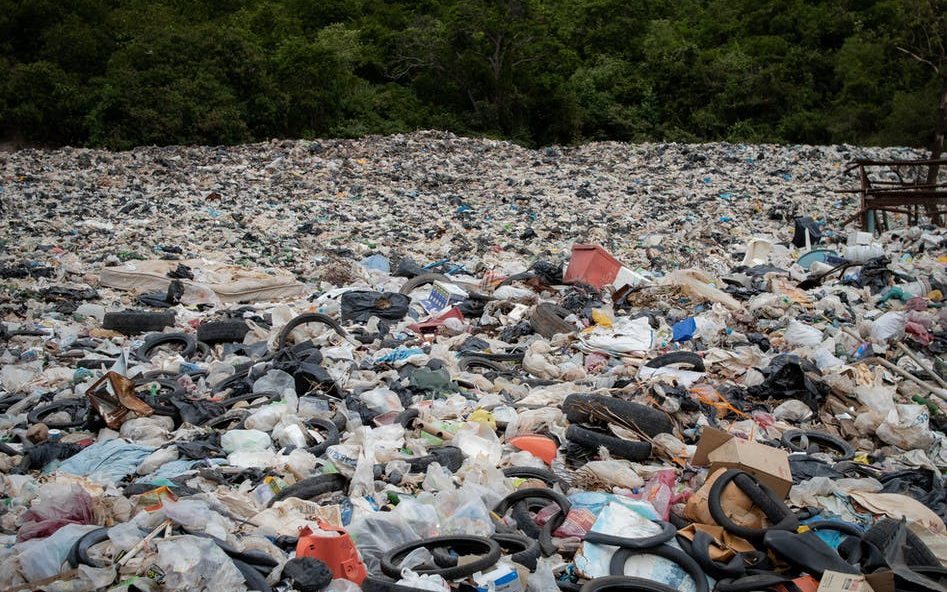
We definitely wanted to make changes to our own habits to reduce this wastefulness, even if it’s marginal. This blog article is going to discuss some of the ways we’re working towards waste reduction as well as how we will be composting our organic matter and some tips/safety around composting, especially in bear country.
Reducing Waste
It can be pretty simple to make some significant changes in the amount of garbage/waste you produce. Here are some easy things that we picked up right away:
- Bringing and using re-usable grocery bags when going shopping; we also use collapsible crates to carry our bags into the house. Less wasteful and more efficient! Plus you almost never need to worry about bags ripping or breaking again since re-usable bags are usually way more durable.
- Buying a bidet! We used to buy wipes, and this not only came in a box and plastic packaging, but the wipes themselves couldn’t be flushed (even if it says they can), and they could quicky fill up a garbage bin in the bathroom. Now we just have some small bamboo towels to pat dry if needed, but otherwise, virtually no toilet paper and definitely no more need for wipes.
- Nearly replacing all paper towel use with just dish cloths and towels. We do still use the occasional paper towel (they can be composted! Read more below), but we try to use cloths for cleaning as much as possible.
- Water! At the moment, we are, unfortunately, still using plastic water bottles, but we’re in the process of upgrading our well system to be safe to drink. It is high in nitrates (31 when it should be 10), so we need something that will help filter those out. One of the ways you can do this is through reverse osmosis. We are working with some expert water folks to figure out what will work best for us, but our goal is to be able to no longer need to use bottled water ever again!
And there are still a number of things we’d still like to do. For one, we still have some leftover laundry detergent that we’re working through, but we’d love to pick up those eco-friendly strips that use way less plastic packaging and are much smaller/easier to store. We are also researching better options for cat litter and litter disposal.
Finally, we want to work towards purchasing less boxed and bagged food. Once we have our garden able to grow produce for us, we’d like to move towards cooking and baking much of our food at home or keeping it local and buying direct from other farms or nearby markets rather than buying pre-made versions of things in the store, especially once we get our kitchen renovation done so we can have some real space to cook and enjoy it in there. This includes preserving, jarring/canning, drying, and other methods of turning what we grow into food that can last in storage and keep us fed.
Composting
One of the first things we wanted to get going as soon as possible was starting to compost. This is honestly super easy to do! We ended up purchasing a plastic tumbler style 37 gallon compost bin (from Amazon). We had thought about building something ourselves, which we may still do in the future, but for now, we wanted something that was quick and easy to set up and get going.
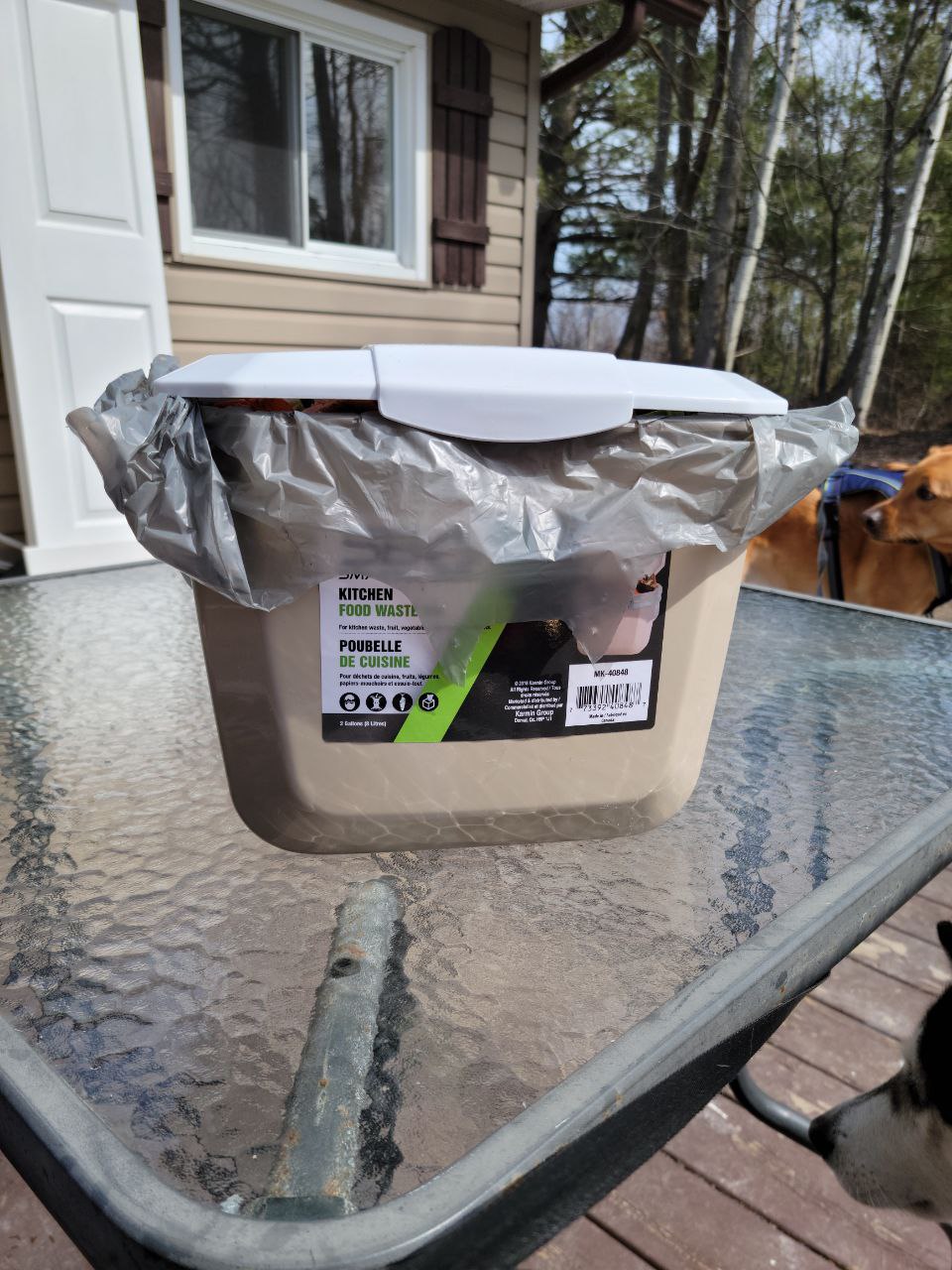
We also purchased a simple and small kitchen compost bin to keep inside so we can toss scraps and things in there. Then we empty it into the outdoor bin once it gets full.
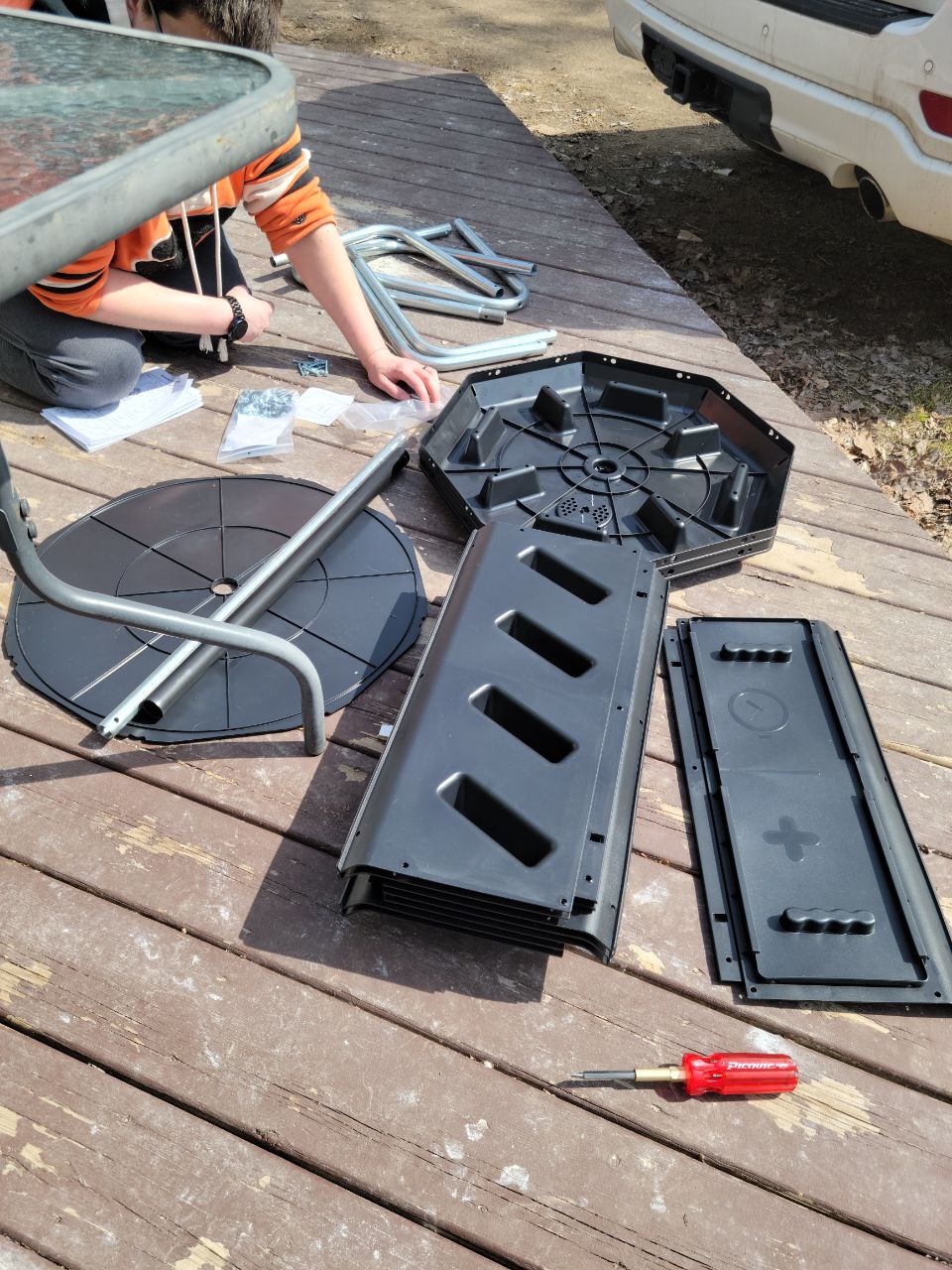
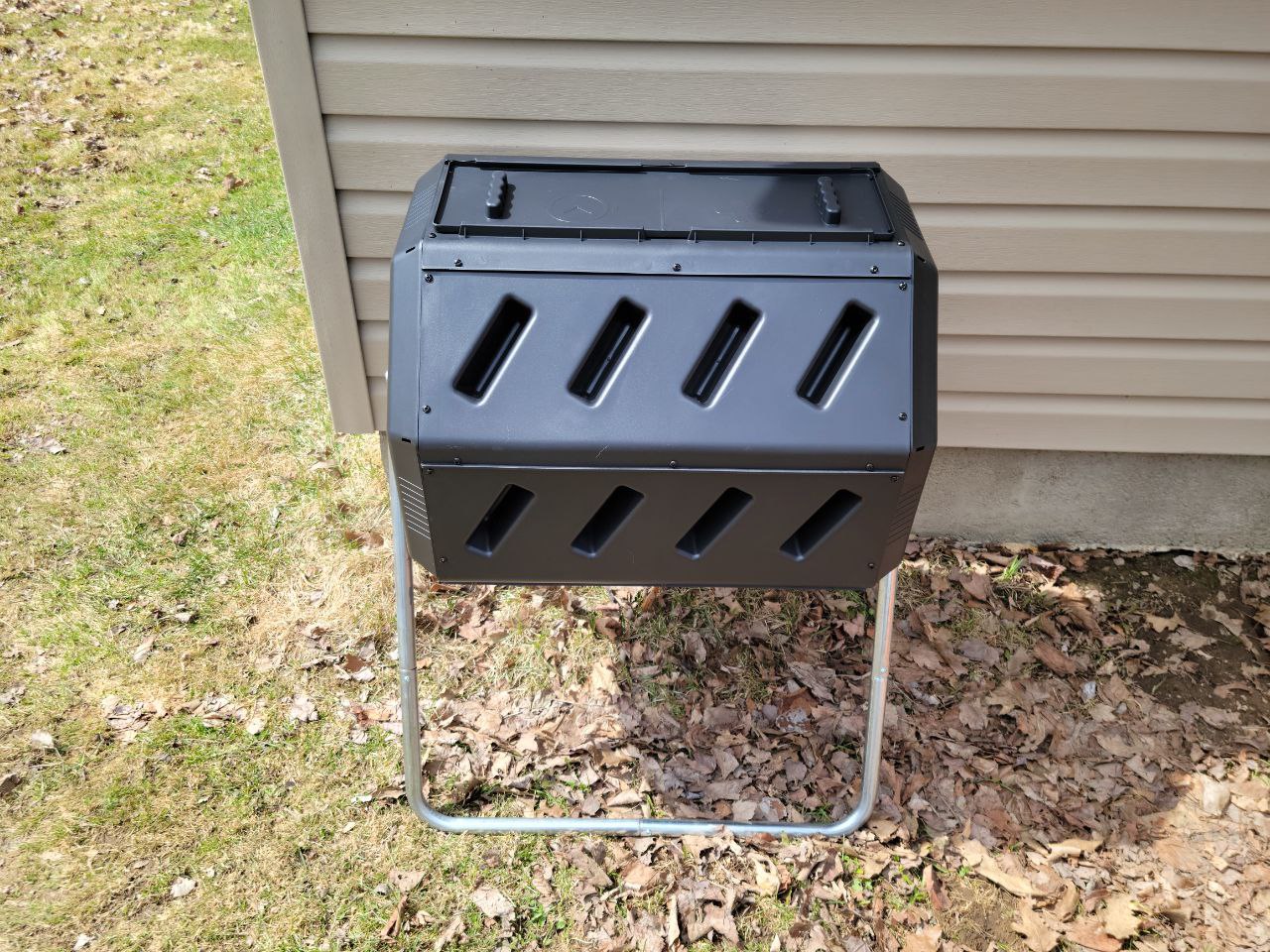
The instructions that came with this bin weren’t the most helpful, and it took a bit longer than intended as I had originally put the metal legs on backwards so it wasn’t wide enough for the tumblr, but we sorted it out! My wife is much better at reading directions than I am…
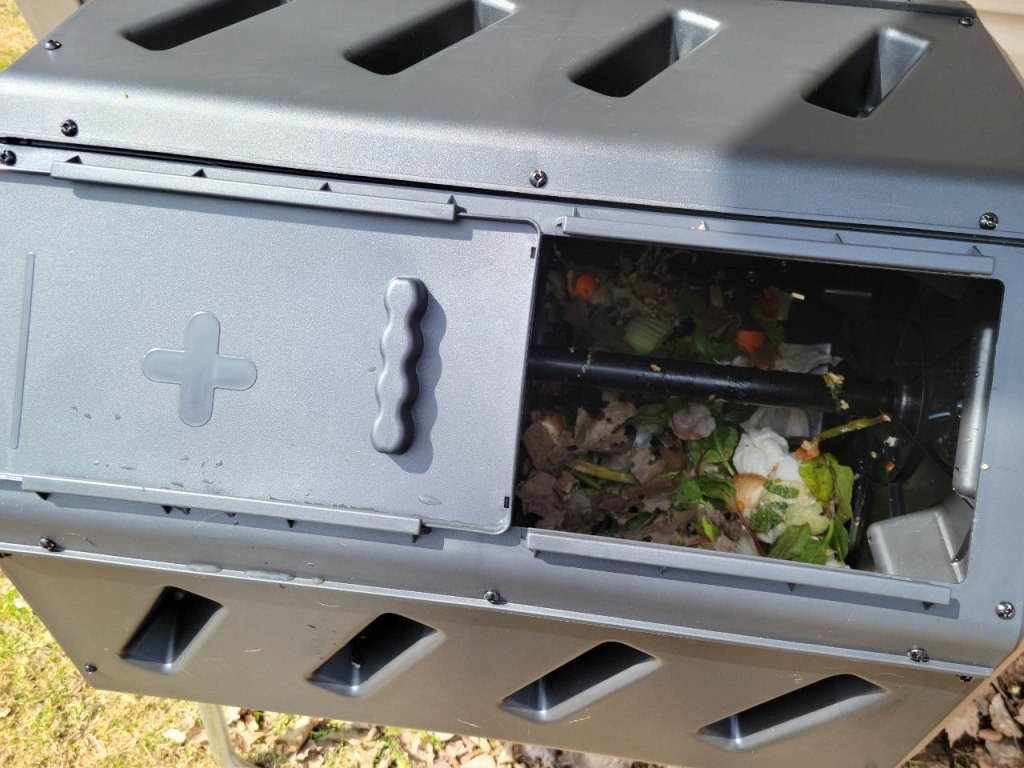
Now the important part – how to compost! The way this bin works is there are two doors on it – one with a clock and one with a plus. The plus is where you add new contents, and the clock is where compost is resting to, well, compost. Once the plus side fills up, you switch the door so the plus is on the empty side and keep going!
When you add new compost, you want to spin it 5-10 times, and you also want to spin it a few times after 2-3 days. That’s pretty much it when it comes to maintenance! To empty this tumbler, you just place a tarp or something similar underneath and turn it upside down allowing the compost turned soil to fall out.
Of course, there are some tips to making the best of your compost and keeping it safe, especially when you’re in a forested area like ours where wildlife like bears or coyotes may be common.
First, you want to focus on composting a mixture of greens and browns. Greens include things like grass clippings, landscape trimmings, coffee grounds, fruit and veggie scraps, animal fur, hair, and manure. Browns include fallen leaves, saw dust, straw, newspaper (torn into strips and crumpled), tissue paper, and cardboard (also torn into small pieces). Some other things that you can compost is rinsed and crushed egg shells, small amounts of fireplace ash, floor sweepings, and dryer lint. It is generally important to add some browns and greens at the same time in approximately the same ratio.
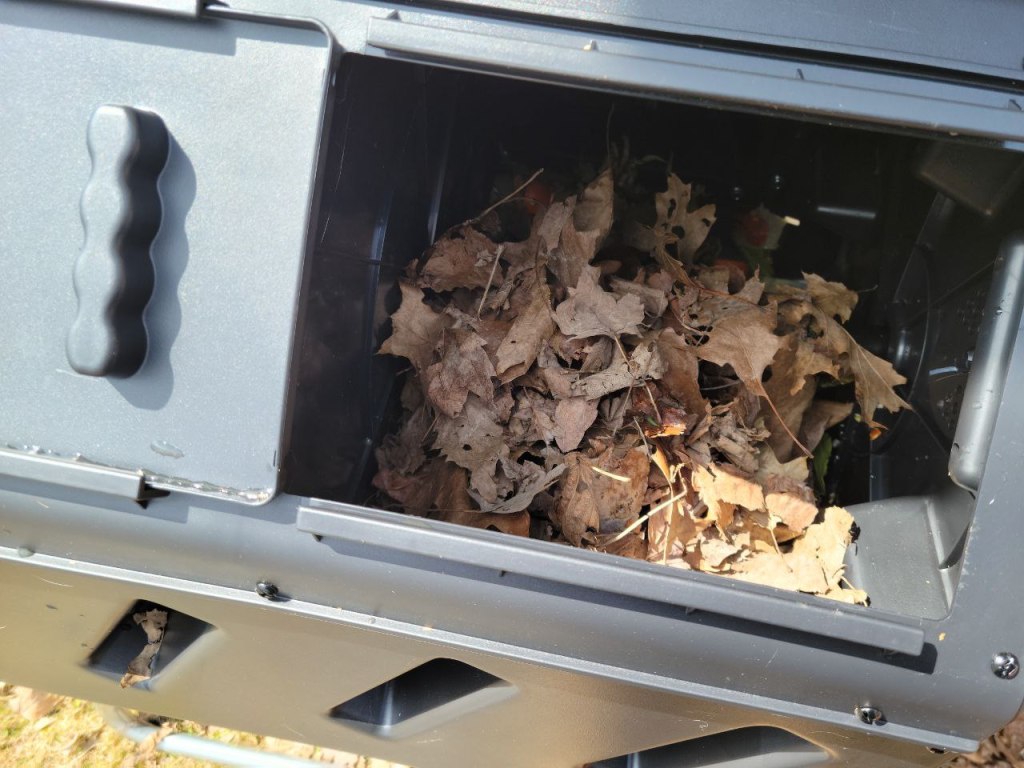
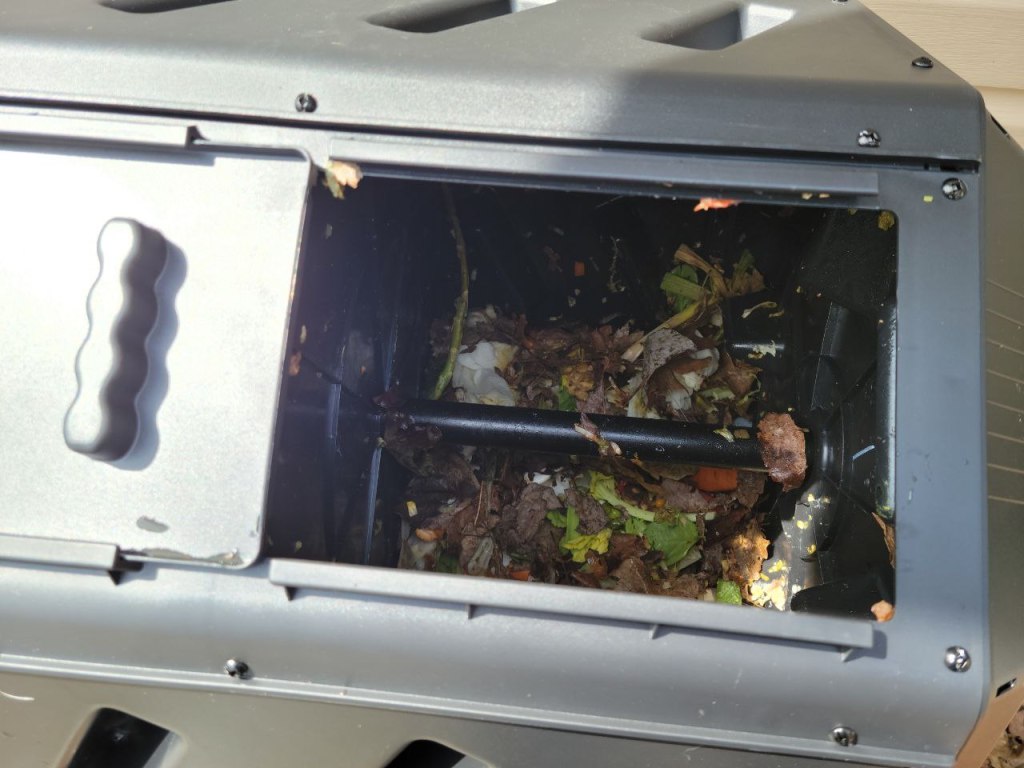
In the pictures below, you’ll see we added the greens from our kitchen (there are some browns in there as well, like paper towels), then we added a bucket of dried leaves from the yard as the main browns, and spun it all together!
Second, to keep the compost and your garden safe from animals, you want to avoid the following things: meat, fish, bones, grains, rice or pasta, dairy, grease and oil, charcoal bricks, or pet feces. These are items that will increase the smell of your compost and potentially attract animals you don’t want around your home and digging through your stuff!
And that’s about it! Hopefully you found some useful information about waste reduction and composting, and good luck if you start with any of this yourself! We’re looking forward to sharing our progress in both of these things as our journey continues.
 Rainbow River Alpacas