For many, the end of winter signifies the start of all the things they can do that they couldn’t do before. It’s natural, annual, rebirth and a chance to start fresh physically and mentally. I never really connected with this idea, truthfully. I always thought it was kind of cheesy and ”not for me” but this year is the first time that I’ve felt motivated by it.
Watching the melting of snow feels exciting and seeing the trees and the foliage below has me looking forward to the buds that will surely appear in a few short weeks. I can hardly believe that TECHNICALLY (As of March 21) Spring has sprung.
In Canada, spring is usually also accompanied by the maple syrup farms and the sticky maple treats that come along with it. I remember when I was young the excitement I had to go every year from February to April. I guess maybe it’s a small town thing? But it also has me thinking ahead to how I can diversify the farm. I wonder how many maples we have on our 4 acres? Maybe by this time next year I’ll be learning how to harvest and refine my own maple syrup!
Spring Plans
With the inevitable thaw, I wanted to take a few moments to talk about what our plans are for this spring. I’m not naive though, I know that in Canada spring isn’t really “real” until the beginning of May. That said, I’d still like to share!
Spring will be starting off with us visiting an alpaca farm here in Ontario. I’m sure we will share more about that soon, but I have to say so far that is something that has me the most excited when I look forward to the rest of the year and what is to come.
Renovation wise the beginning of spring means that we can go ahead with the projects that require digging or pouring cement. For example, a well filter, a new air conditioner and a fence to keep our curious little puppies contained.
While those things will start in spring, they will certainly take a little bit to really come to fruition. In the meantime, we’re going to be installing a quick little chicken wire fence and looking into our other projects.
We’d love to start a compost and waste recovery system, get a garden or greenhouse going, do some forest maintenance planning and build an outdoor paradise for us to spend this summer in.
Summer Lookahead
We’ve talked a little bit about our spring plans, but spring will eventually move into summer. We would love to be at the point where our barn for the alpacas is started by the end of the summer. Here’s our summer goal list:
Tree removal and forest conservation
Start getting the area for the barn ready
Build out pastures
Plan for alpaca purchase
Plan for Yurt builds
Thank you!
We are so thankful for all of you who have supported our journey so far. We can hardly believe that it’s been a week since we moved, but here we are in Pembroke and making the best of the situation we’re in. If you’re looking for a more detailed update of how the move went, please check out our social media. I’ve added an instagram feed below for you, too!
The move is upon us! We are officially, finally, moving to Pembroke on March 25! That’s 4 days from now, I can hardly believe that. Have you ever prepared for a 600KM+ move? No? Let me tell you, it’s a whole other animal from moving across town or even a few hours away.
Moving Experts
Sylas and I are no strangers to moving. Since we met, we have moved 7 times, mostly to apartments, but one of them was a 14 hour move from North Carolina to Ontario, so we’re kind of experts. That said, we definitely realized when we hit 30 that we just simply are not young enough to move our stuff and for our last move we indulged and got movers. Total game changer!
That said, it was obvious that for our long move we would also need movers because there is no way we would be driving a huge truck 6 hours through mountain roads after loading a truck with all of our worldly possessions and our pets.
We are moving from a 1500 sq. ft. house to a 500 sq. ft. house, that’s 1/3 of the size for those math people like me. We’ve been doing so much downsizing to go from 3 bedrooms, 2 bathrooms and 3 living rooms down to 1 of each. It’s simultaneously a little sad to see some of our first furniture purchases donated to those in need here in London and also really satisfying to see how minimally we can live. We started downsizing in January and have been living between our kitchen, living room, bathroom and bedroom to get used to the smaller space and less belongings. Surprisingly, It’s been “freeing” to not feel like we have so much stuff that isn’t being used. Of course, that stuff once served a purpose, especially when we had 6 people living here, but it’s nice to get back to only the essentials. Love her or not, this is something that really resonated for me in this time of transition; from Marie Kondo:
“To truly cherish the things that are important to you, you must first discard those that have outlived their purpose. To throw away what you no longer need is neither wasteful nor shameful.”
– Marie Kondo
Renovations
One of the first things that we did when we purchased the new house in Pembroke is begin renovations. The property had a large 2 car garage on it and the 500 sq. ft. house. We knew immediately that we wanted to convert the garage into a rec room area and also a place for my (Holly) office. We also had some cosmetic and structural updating we wanted to do to the main house in the bathroom, kitchen, windows and flooring.
We started working on the rec room right away in October and I’ve shared some progress of that below.
Rec Room Reno
The rec room renovation is looking great, as you can see, and is slated to be done early this week and ready for our move on Friday. I’m sure you can see where this is going… BUT, the rest of the house is not even close to complete. We pulled up the floor, found some AWESOME water damage and rot and tore out the entire bathroom. We’re really hoping that the bathroom will be complete before we move next week, because we kind of need that, but the rest of the updating will not be. That’s where things get tricky. Stay tuned on our social media to see how we live in the rec room with two dogs and two cats. It’s bound to be interesting!
House Demo
Animals and Moving
The biggest hurdle of our move has definitely been figuring out how to move two dogs and two cats in our Jeep. Our cats are not lovers of the car, even though Rose did move 14 hours with us, and the sweet little Bo gets motion sickness. We’ve enlisted the help of our vet to get some anxiety medication for our cats, and Bo does well with a bucket and the company of Luna. We’ve actually trained her to use the bucket for any throwing up that might happen.
The biggest hurdle is how we’re going to fit everyone comfortably. We’ve done some test runs with Bo and Luna in the back seat of the car together and things are okay, but where do the cats factor in? We’ve decided to setup a barrier between the back seat and the trunk and then put the cat carriers in the back with easy access. Hopefully it all works out!
New Era
We can’t wait to see where the next few months take us in our new home as we start this brand new adventure. This really is a new era for us, moving from city life to country life. We hope you join us on this journey! Feel free to share any comments, recommendations or advice and always remember, it’s NEVER too late to pursue your dreams, even if they’re on a completely different path.
Welcome to our first farm fail Friday! This segment will run on the third Friday of each month and will cover some kind of “fail” that we’ve overcome in the month.
Coming from the city, something we forgot would be important was technology accessibility living in the great-white north. We drew up our offer on the Pembroke property, put it in, it was accepted, and it wasn’t until the move planning that we remembered we should probably look into internet. Especially, the feasibility of me (Holly) continuing to work in IT, remotely, in the house while starting up our homestead.
Boy was I in for a surprise when I found out there was only one provider that wasn’t a cellphone carrier that offered internet in my area, and that this provider was a satellite internet provider with no guaranteed speeds. If you want to see a tech nerd sweat, tell them they won’t be able to get on the internet for a few days. Jokes aside, I went into extreme panic mode, Googling all of the major players for internet in the area. I was met with screen after screen of “Sorry, but this internet package is not available in your area” or “we cannot guarantee service in your area”.
So, what did I do? I immediately looked at the best cellphone service in the area, which happened to be Bell. They were launching their 5G phone service in the areas around the new house. Even though I was with Rogers, I invested in a secondary SIM card (the card that goes into your phone to register you on the network) and a basic plan to test the speeds at the new house once we took possession and then I went back to work researching.
Our Internet Options
In rural Ontario, you have 4 options for internet service if you are not able to get traditional cable or fibre service with one of the big Internet Service Providers (ISPs). These options are:
Wireless Internet – Uses isolated LTE towers to “beam” internet to your house
Satellite Internet – Uses traditional satellites that orbit the earth
Cellular Internet – The very same as you use for your cellphone
STARLINK – Low orbit satellite internet that is on a waiting list
Our new property is surrounded by mountains, beautiful old trees and water. This is wonderful and so nourishing for your soul, but it’s TERRIBLE for any kind of wireless internet so unfortunately we only have 3 options. I’ve detailed these options below.
STARLINK
Low orbit satellite internet
Created by SpaceX
Around 100Mbps down /20Mbps up
Low Latency
Unlimited Data Cap (For now)
Affordable at $129.99 CAD / mo
Bonus – Bringing internet to isolated communities. See feature below
CELLULAR
Traditional Cell service (4G, LTE or 5G)
Max 300Mbps Down / 20Mbps Up for LTE+ (Common across ON)
Great speed, mid latency
Data capped around 50-60GB/mo
Expensive starting around $80/mo
SATELLITE
Traditional satellite internet (Xplornet is just one)
Max 25Mbps Down / 1Mbps Up
Terrible for Latency and poor for video calls
Limited Data Cap at full speeds
Expensive at $229/mo for full service
What are we doing?
So which option did we pick? We immediately signed up for Starlink and were told that we would get our service in late 2021 (Since pushed to mid-2022 because of COVID). With Sylas working remotely in technology, upload speeds of 1Mbps and high latency will not work well for him, so our only option is cellular.
When I say that Canada is SO far behind the rest of the world in our cellphone plan offerings, I mean it! In Canada you will be hard pressed to find a plan that offers more than 60GB/mo shared data for less than $115/mo. This would work for Sylas’ work but definitely would mean no more video streaming for fun.
Lucky for us, Sylas is American and we have access to a US Unlimited cellphone plan that includes TRULY unlimited bandwidth with no throttling. It’s available to use in the USA, Mexico and CANADA all for $129.00 USD per month. It’s expensive, but still cheaper than XPLORNET and much faster.
Using my Bell SIM card while I waited for the US SIM card, I setup a test network to make sure this proof of concept would work and then I tested, somewhat obsessively, to make sure we would be able to get our network functioning acceptably. We are able to pretty consistently get 30Mbps download and 5Mbps upload. It was quite the process to get everything setup, so I’ve included a bit on the process below.
The Process
My proof of concept for the network involved using a Cellular Booster (Remember those trees?), Cellular LTE Modem and a high-speed wired and mesh Wireless network setup on the property. I’ve included a bit of an overview of each of the devices we purchased below and also a brief explanation of its purpose and setup. You can click any of the images below to be taken to Amazon to view the listings there.
LTE Modem – COST $250 CAD
The LTE modem we purchased is the Wiflyer WE826-Q. This unit uses the SIM card from our American provider and act as the end point device.
How we set it up:
Install SIM card from Cellular Service Provider
Turn on device and confirm SIM card is registered
Turn off internal Wireless (Because I’m using my own and the internal antennas on this thing are kinda crappy)
Confirm unit is working by plugging into it with ethernet cable
Set custom user/password and ip address for security reasons.
Cellular Booster – COST $250 CAD
The LTE modem relies on the ability to connect to the cell network in our area. We were only able to get a few bars of service so we purchased a cell booster.
How we set it up:
Confirm the best location for the unit. Ideally you want to point the roof antenna toward the cell tower that is closest. THIS REQUIRES WORKING AT HEIGHTS. To find the closest cell tower, use a map like THIS ONE.
Install the unit and run the COAXIAL cable inside
Connect internal unit BEHIND the external unit to limit interference
Confirm with LTE testing app that you are seeing improved cellular signal. For example, we were able to see a change from -110dBm to -60dBm. Usable cell signal is anything above -80dBm with 0 being ideal right at the tower.
Mesh WiFi – COST $399.99 CAD (On Sale)
We went with a mesh wireless setup because our property is large and we want to be able to have connectivity inside and outside near our garage.
How we set it up:
Setup one unit in the house with the LTE modem using Ethernet and the other in our external garage wirelessly
Configure an IP address that will not conflict
Set the wireless network name (SSID) and password
Confirm connectivity throughout.
In Summary
Don’t be afraid to pursue your dream of country living just because you’re worried about the lack of technological availability. There is always a workaround, but DO plan in advance. Luckily the Ontario government also has a goal of providing high-speed internet to rural communities, or as they put it:
Welcome to the first edition of Sylas’ Segment! This will happen once monthly on the third Monday and involves Sylas posting in place of Holly!
Over the course of our 10 years together, Holly and I have collected a number of furry friends: our four-legged children, so to speak. We certainly love them as much! Since you’ll be spending some time with us as we get our farm set up, you might as well meet the pets that call the farm home too!
Rose
Rose is a 10 year old calico, and she was our first pet that we adopted together. Back when we were living in North Carolina, Holly, who was much more of a cat person than I, convinced me that a cat would be a good and easy to pet to have as our first one together. We ended up at PetSmart, and this little girl called our name! She was rescued from a kill shelter, and we knew we had to take her home. She is named after Rose Tyler from Doctor Who, a favourite show of ours. She made the trip up to Canada with us, and she continues to bring us joy and snuggles. While she’s got a bit of sass, she’s a real sweetheart.
Favourite Food/Treat: Anything fishy
Favourite Toy: Laser lights
Favourite Game: Pawing your face when she wants pets (or when you stop petting her)
Ragnar
Now that I’d fallen in love with cats after a few years with Rose, Holly and I had an urge to add more furry friends to our pack. We went to PetSmart the day before Black Friday, and there was this little black kitten that we absolutely fell in love with, so we told ourselves, “if he’s still there tomorrow, then we’ll get him.” Well, we showed up the next day, and there was a whole new group of tabbies ready to be adopted! This little guy was scaling walls of the crate and just being so playful and adorable, he won our hearts, and he’s been continuing to win our hearts and everyone else’s since. Definitely a people cat, he loves belly rubs and playing with chirping toys that he can bat and chase around.
Favourite Food/Treat: Wet cat food
Favourite Toy: This mouse toy that he’s ripped all the stuffing out of
Favourite Game: Chasing things on a string (especially if they make noise)
Bo
As much as Holly had to convince me to get a cat, I spent years trying to get her to want a dog. We were this close to getting a Boston terrier, but then, Holly’s sister’s dog got pregnant, and we had a new plan: take home one of those puppies instead! They were born just after we got married, so in a way, it was a wedding present to us. We picked Bo for her uniqueness, being the only fawn-coloured pup of the bunch and the cute little white dot on her head. Believe it or not, Bo is 75% rottweiler and 20% Shetland sheepdog (5% a bunch of other random DNA), though you’d never guess by looking at her. She is four years old and still acts like she’s two, an absolute bundle of never-ending energy. She loves running, tugging, and chewing bones. She’d do anything for a treat. We call her Wiggles, because when she gets excited, her whole body wiggles!
Favourite Food/Treat: Pizza
Favourite Toy: It changes day to day, and she’ll dig through the toy box and take everything out until she finds it
Favourite Game: Tugging or fetch (once you manage to get the item out of her mouth via tugging)
Luna
Luna is the latest addition to our family, as we’ve only had her for 6 months now. We had been considering getting a second dog for a while, so I had subscribed to notifications on Pet Finder, and when this sweet husky face popped up, a breed we’ve both always loved, we reached out right away, and she was available! She was taken in from Mexico and was heart-worm positive, so she got treatment, spent some time in foster care recovering, and then made a multi-day journey up from Texas (with some other rescue dogs) to meet us in Canada. She took some time to warm up, but now she’s just part of the pack. She’s a real goofball and lots of fun to have around.
Favourite Game: Laying upside down on you with her limbs all twisted up in some impossible way (we called it topsy-turvy time); also trying to escape so she can explore everything
And that’s the whole family for now! We can’t wait to add our fuzzy alpaca friends in the near future, and we’ll definitely spend time introducing you to all of them as well!
5 years ago Sylas and I joked with his mom that it would be supremely awesome if we just gave up our corporate life and went on farming camelids. As we entered 2021, we didn’t expect for that to be in our realm of possibility, but it became a matter of a “perfect” storm of circumstances that got us here.
Almost exactly one year ago, in March of 2021, Sylas and I went on a trip to Cobden, ON to look at 4 acres of land with nothing on it as a potential investment property. Let me tell you, for our first drive north together in the “winter” it was quite eventful as a snowstorm fell on us in the mountains! When we looked at the land, not knowing a lot about alpaca farming at the time, we were too gun-shy to pull the trigger. We had the original intention of buying the land with the purpose of farming at retirement or while we continued to work remotely, but we just didn’t know what to look for.
One of the most daunting tasks so far of us pursuing our dreams has been figuring out if the land we were looking at would be suitable to farm alpacas, eventually. Further to that point, we didn’t even know how to prepare the land if it was suitable but not cultivated. Hopefully this post will help you if you’re looking to get started!
Purchasing Land
It’s not every day that you decide that you’re going to uproot your life, move 600kms north and start a farm after living in the city for over 10 years. In fact, it’s just the thing being in a year and a half long lockdown incites! Not knowing the first thing about farming and trying to choose appropriate land was a doozy.
Originally we were going to consider purchasing empty land but with the pandemic that quickly changed with the shift in remote work possibility. We spent many nights poring over information about farming, the Ottawa Valley, certain livestock requirements, bylaws and even had a nice 2-hour chat with a lovely local alpaca farmer. It was from this research that we birthed our LIST OF REQUIREMENTS. We decided that if the land did not meet these requirements we would pass and keep looking, NOTABLY, we forgot to consider internet (more on that next week).
List of Requirements
Minimum of 3 Acres of Land
At least 3 acres of land to ensure adequate space for camelids to prosper and still have space for our dogs and general outdoor enjoyment.
Even Spacing of Features
Fairly even shape to ensure adequate spacing for well, septic tank and paddock/barn. It’s important to consider any kind of setbacks you might have in relation to your neighbour’s property as well. A setback dictates how far you have to be from certain parts of the property, and once a structure is built, that structure creates setbacks for anything else within the setback distance. For example, you can’t build your barn along your property line if your neighbour’s well is just on the other side of the fence.
Rural or Agricultural Zoning
This is what allows you to actually farm on your land!
Local Bylaws
Remember those Setbacks I talked about? Each municipality in Ontario can choose to have setbacks for different farm/agricultural features. These can be in relation to smell and waste management. Be sure to check with the municipality before pulling the trigger if you are unsure. When you talk with your bylaw officers, it’s really important that you emphasize how different alpaca farming is from other livestock farming!
PRIVACY
To be honest, we hate neighbours after living in the city. We wanted a lot with trees around it to keep things relatively private.
2 Bedroom Home
House with at least 2 bedrooms with minimal TLC/Renovations needed (We were going to think about building, but that was a lot).
Nearby Amenities
Close to a hospital and general amenities like a grocery store, vet, doctor, dentist, etc.
Well Type and Filtering
We considered what type of well was installed and any type of work that might be needed to maintain it or make it safe for our general use. Ideally, we would have liked a deep well with somewhere to easily install UV Filtering.
Eventually we settled on our 3.7 acre property just outside of Pembroke, ON. It took quite a long time to meet all of these requirements we had come up with, but we finally did it! The only requirement that we didn’t quite meet was the well, but we budgeted to make that right.
All in all, the process took about 9 months. We had started seriously looking in March of 2021, purchased in August 2021 and closed in October 2021. The market is extremely difficult right now in Ontario, especially for land purchases, so we definitely think we got very lucky.
Alpaca Specific Considerations
Most of our requirements are applicable for ALL types of farm land, with one key distinction: our desire to farm Alpacas! Alpacas require so much less than most other types of Livestock farm and as a generic example you can farm 40-50 alpacas on the same amount of land where you would be able to have 6-8 cattle. That’s a huge difference!
Sustainability
Alpacas are low impact animals. They survive off of very little grass and hay and they are very easy on the land. They cost much less than most other livestock, have less environmental impact and are financially very sustainable. That said, it’s important to consider that they DO require a certain setup of land and access to things like open air and sunshine to maintain good health.
Prey Animal Threats
By nature, alpacas are prey animals. This means that they are timid, but that they also require certain protections. You will require space for at least a 5 foot perimeter fence as well as some kind of guard dog or animal like a llama or donkey. Surprisingly, one of the biggest threats to local alpacas is neighbourhood dogs, so having deterrents for any kind of interaction is very important.
Barn, Grass and Water
Taking care of alpacas is quite simple, but there are a few things to look out for when you are setting up your barn, pastures and water situation.
Barn
3 sided barn with open airflow and access to pasture
Open side should be the most sheltered side from the elements
Check for good drainage away from barn to limit complications
Make sure that you can close off pasture for wet season
Grass
Make sure you have one of the best grass types (orchard and brome at a 75/25 ratio)
Avoid grass with thistles, milkweed, sumac, burrs. You can use goats to help clear this.
Make sure you reseed pasture as needed
Water
Collecting rain and snow melt is ideal
Filtering water into a cistern under ground below the frost level
Make sure you have a filter system to get out the dirt and debris before it fills the collection
Future Considerations
As I mentioned before, our property is 3.7 acres with a bit of a cleared land in the middle. To have alpacas on our land we will have to clear at least an acre of the land at the back of the property. We aren’t sure we want to do that!
Trees at the back of our propertyView of the house from wooded clearing
Our property is coincidentally connected to a number of open fields, so we’re hoping to purchase some more land to make things a bit easier! We shall see what happens.
This is a question I’ve asked myself over and over. I’ve spent many days wondering what it is about alpacas that makes me want to have them in my life and in truth, I think it comes down to that innermost feeling I get when I look at them. You know when you look at something cute and you just want to love it so hard with everything inside you? That’s alpacas for me, to the point where I tear up with joy when I see them.
My love for alpacas started just like that, a love and nothing more. Like most people with special interests, I spent a great deal of time researching them and what I learned really drove me to want to take the leap into rearing them myself. The main driving factor is how low-key alpaca farming is. Frankly, they are easy to love and easy to care for! I’m going to share some information about them below.
About Alpacas
Alpacas are a member of the Camelid family along with Llamas and Camels as well as the lesser known Vicuna and Guanaco. They range anywhere from 5ft to 5.5ft tall, weigh between 120lbs and 200lbs, and live for approximately 20 years. They are originally from the Altiplano region, which is in South America and spans between Bolivia, Peru, Chile and Argentina.
The Altiplano region lays in the central Andes…
There is biodiversity in these areas which span from arid grassland to mountainous snowy peaks. The region is harsh and food can be scarce. Alpacas have adapted to living in such conditions and thus have a very low ecological footprint.
In general, there are two different types of alpacas, Suri Alpacas and Huacaya Alpacas. Suri Alpacas are known for their long shag-carpet like fibre where Huacaya have the fluffy look and are much more common.
Alpaca farming is all about fibre production. One year of fibre, at wholesale cost, can cover the cost of care for your animal. Why is Alpaca fibre so sought after? It’s simple, Alpaca fibre is:
Extremely Warm/Thermal
Soft
Anti-Microbial
Strong
Hypoallergenic
Naturally varied in colour.
Caring for Alpacas
Caring for Alpacas is quite easy and they tend to require less than most other livestock farms. Why is this? They are very self sufficient and robust animals, considering the type of landscape and ecosystem that they come from. Care for these animals can be broken down into four major categories: Shelter, Grooming, Feeding and Healthcare. I’ve provided a brief overview of each below.
Sheltering alpacas is easy….
Since alpacas are from a varied climate, they can survive most elements with a 3-sided barn with free access to pasture grazing. The barn should be positioned in such a way that the majority of the elements (rain, wind, snow, etc.) hit the walls or awnings.
Grooming is not required…
You might think that if you have alpacas you will spend a lot of time taking care of the fibre. In fact, that’s not the case! The best fibre is undisturbed until sheering which happens once a year in spring.
Feeding is a breeze…
Alpacas eat less than an average domestic dog eats in a month in an entire year. You will feed them one serving per day of feed with access to pasture and hay all year round. These animals are very low impact!
Healthcare is also quite simple…
You spend one day a year providing major healthcare to your animals like vaccinations, toenail trimming and teeth grinding. You will worm them (like a dog or cat) throughout the summer months. You will also use a livestock vet, though these visits are somewhat rare as the animals are robust.
Poll
We love to use YOUR feedback to cultivate the content that we share. Our main focus will always be alpacas, but there is a lot of work that goes into building a farm from the ground up on uncultivated land. We want to hear from you on what topics you’d like to see more of!
Welcome to the Rainbow River Alpacas blog! We are so glad you’ve joined us on our adventure. We are currently in the really early stages of turning our piece of paradise into a fully functioning alpaca farm! We purchased our new home and 3.7 acres of land in Pembroke in August 2021 and closed in October.
Since October we’ve been steadily planning our next steps ranging from taking farming classes to figuring out how to use quickbooks on the business side all the way to gutting our garage and home and starting renovations.
The home on the property is a quaint 2 bedroom 1 bathroom bungalow from the 1960s and as such it’s in need of some major facelifting even though it has good bones. We will probably share some updates on that journey once they’re finished, because let’s be real, we know you’re here for the alpacas!
ALPACAS! We have just finished a crash course in alpaca rearing put on by Oak Hills Alpacas in Stirling, ON by Heather Candler. These workshops were wonderfully done and really left us feeling capable of starting this journey. Since we are still new to all this, we really encourage anyone reading to check out Oak Hills for more Alpaca content, and if you’re interested in starting a farm yourself, we couldn’t recommend a better mentor than Heather.
Our little piece of paradise…
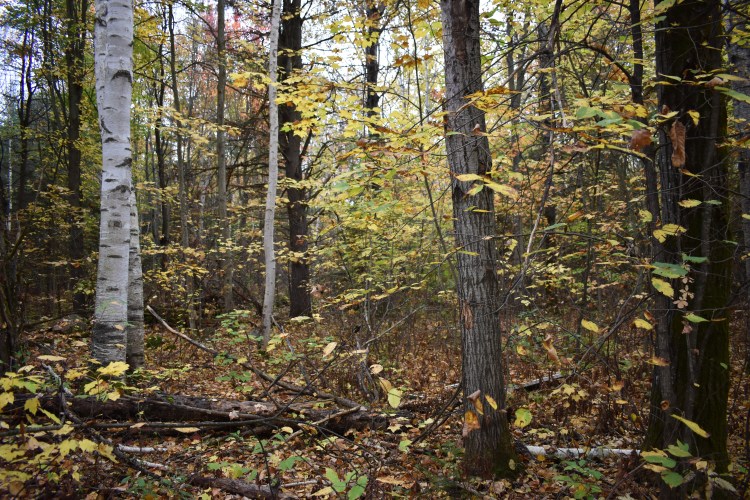
This picture was taken in fall 2021 shortly after we took possession. Our lot is surrounded by trees and pasture lands and near many lakes and rivers to enjoy the outdoors.
Farm Timeline
Our plan to start Rainbow River Alpacas all began back in March 2021 when we were a little pandemic crazy and purchased our land in Pembroke, ON. Our timeline from building the farm and to having guests come to stay is below (though as we all know, plans are always changing). We are hoping to be open for business by mid to late 2023!
March 2022 – MOVE!
April 2022 – Well planning and adapting to life in the country
May 2022 – Greenhouse Build
June/July 2022 – Forest Conservation and Tree Removal
Winter 2022/2023 – Planning for Alpacas
Spring 2023 – Barn, Yurt and Pasture Build
Summer 2023 – Alpaca Arrival
Fall 2023 – Open for visits!
Blog Schedule
Our goal with this blog is to provide you timely updates on the events going on at the farm and to share a detailed look at some challenges and how we overcome them along the way. We will have three different types of blog posts: Regular Posts, Sylas’ Segments and Farm Fails. I’ve detailed these below.
Regular Posts
Regular posting will be weekly on Mondays @ 10AM
Farm Updates
Plan Overviews
Day to Day Country Living
Sylas’ Segment
Sylas posts special segments the 3rd Monday of each Month
Community Features
Animal Cuteness
Beginner Gardening
Farm Fail Friday
Farm Fails posted the 3rd Friday of each month
Overview of a challenge we have faced on the farm that month






 Rainbow River Alpacas